
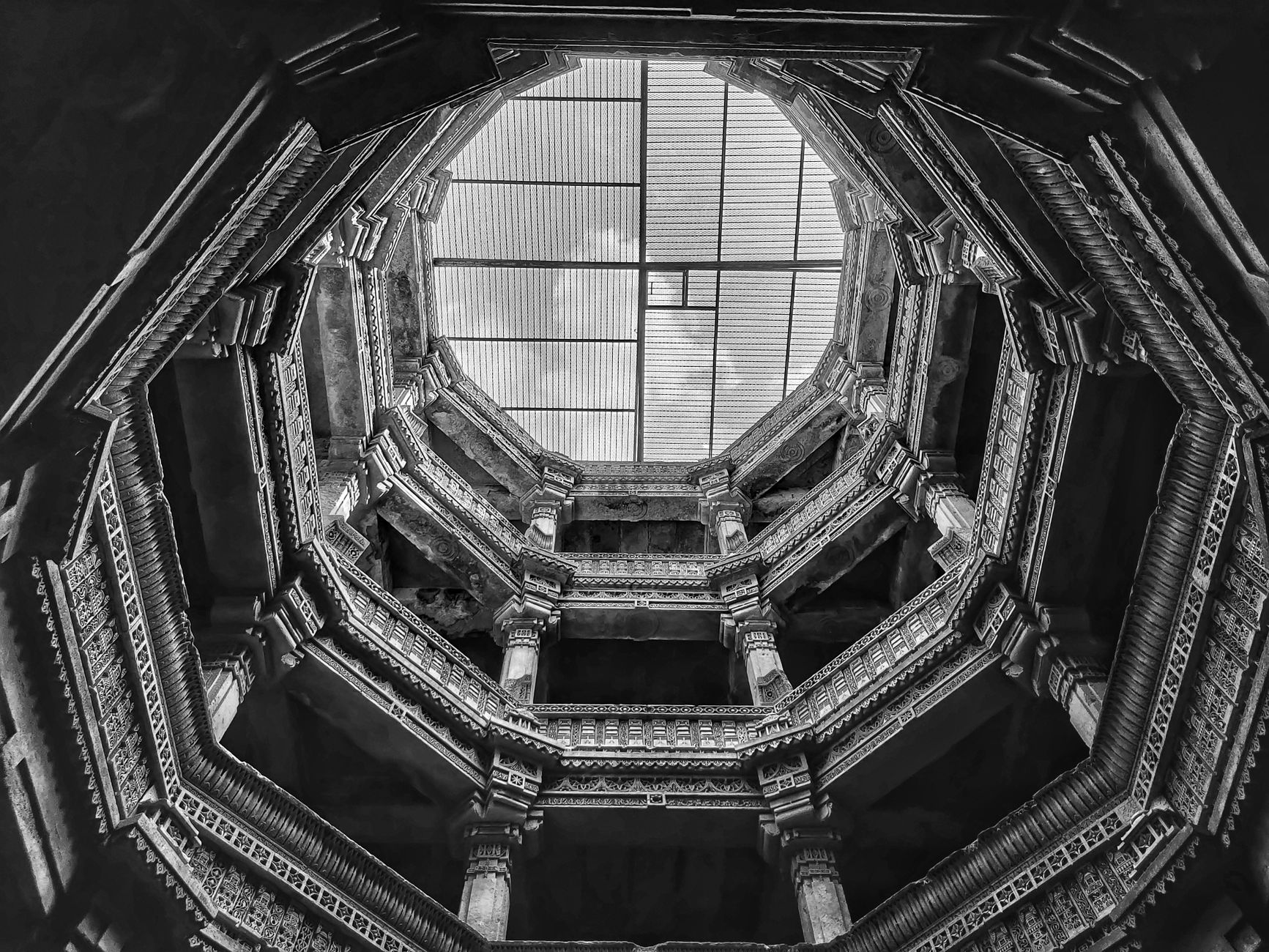
1. Neemrana Fort-Palace, Rajasthan
Neemrana is 120 km south of Gurugram off NH-48, a fifteenth-century Chauhan fort that has been rebuilt as a heritage hotel but retains the tiered courtyards, the ramparts and the deep cistern that make the site worth the drive. Day-visitor entry at ₹1712 gets you access to the twelve levels of the fort, the hanging gardens on level nine, and lunch at the upper terrace restaurant. The zipline over the ravine costs extra and is skippable.
First on this list because it is the only site within striking distance where you get real medieval architecture at scale — battlements, cannon positions, water systems — combined with enough restoration that you can actually walk it. Come on a Tuesday or Wednesday to avoid the wedding crowds who bus in from Delhi and Gurugram at weekends. Drive time is 90 minutes each way outside rush; leave Gurugram by 7am and you are on the ramparts by 9:30. Skip May and June — the sandstone hits 50°C by midday.
2. Sultanpur bird sanctuary lakeside, and the ruined chhatris
Sultanpur is 15 km west of Gurugram and it is not officially a monument — it is a bird sanctuary — but on the northern edge of the wetland there are three sandstone chhatris from the eighteenth century, half-collapsed, unlabelled, and photographable from the walking loop. They belonged to minor Jat landowners and never made it onto any protected list. Combined with a morning walk for painted storks and sarus cranes in winter, this is a real half-day.
Second because the ruins are modest but the setting is unique — no other historical stone in this region sits inside a working wetland with two hundred bird species. Entry is about ₹114 for Indians and ₹571 for foreigners, gates open 6:30am, and the whole loop takes ninety minutes at walking pace. Come November to February when the migratory birds are in and the water is high. April onwards the lake shrinks, the chhatris look isolated on dry mud, and half the point is lost.
3. Farrukhnagar and the Sheesh Mahal
Farrukhnagar is a walled town 25 km west of Gurugram founded in 1732 by a Baloch general in Mughal service, and it retains the octagonal plan, five surviving gates, and the Sheesh Mahal palace at the centre — a two-storey pavilion with fragments of the mirror work that gives it its name. It is on the state protected list rather than the ASI list, which shows: some rooms are locked, the caretaker is intermittent, and there is no ticket booth.
Third because what survives is genuinely rare — a small Mughal-era planned town with intact gates — but the presentation is rough. Come with a driver, allow two hours on site, and expect to tip the caretaker ₹190 to unlock the upper storey. The Ghaus Ali Shah baoli (stepwell) five hundred metres east of the palace is the other reason to come; it is deep, dry, and photographable from the top steps. Combine with a Sultanpur morning for a full half-day heritage run.
4. Damdama-era Shiva temple complex, Sohna
On the eastern edge of Sohna town, above the hot springs, there is a small sandstone temple complex dated to the twelfth to fourteenth centuries — pre-Mughal, likely Chauhan-era — with a shikhara that has partially collapsed and carved lintels that are still legible. It is not on any tourist map. Ask for the purana mandir above the springs and locals will point. Entry is free, there is no caretaker, and you have the site to yourself on a weekday morning.
Fourth because the site is small — maybe twenty minutes of actual looking — and the surroundings are messy: the springs below are crowded and the road up is broken. But for a specific interest in pre-Mughal Haryana stonework this is the closest thing to Gurugram, and the ridge above the temple gives the Sohna valley view that made the earlier viewpoints list. Come November to February by car; 45 minutes from Golf Course Road, ideally combined with the Sohna switchbacks lookout.
5. Qutub Minar complex, Mehrauli (Delhi side)
Qutub is 22 km from Cyber City and it is technically Delhi, but no honest monument list within reach of Gurugram omits it. The 73-metre minaret from 1193, the iron pillar that has not rusted in 1,600 years, and the Quwwat-ul-Islam mosque built from twenty-seven demolished Hindu and Jain temples — the site is a UNESCO listing that earns it. Entry is about ₹666 for foreign visitors, ₹48 for Indians, and it opens 7am to 5pm.
Fifth on the Gurugram list rather than higher because you are essentially going to Delhi, and if you have Delhi time there are three or four sites of equal weight nearby — Mehrauli Archaeological Park, Humayun's Tomb, the Lodi Gardens. But if this is your only monument day and you want the marquee site, take the yellow line metro from Sikanderpur to Qutub Minar station, 45 minutes end to end, and be there at 7am when it opens and the light is right.
6. Sohna hot springs Mughal-era caravanserai remains
On the Delhi-Alwar road just north of Sohna, half-hidden by a truck stop, there are the foundations and one surviving arched gate of a seventeenth-century caravanserai — a Mughal-era rest house for the Delhi-Rajasthan trade route. It is unmarked, unprotected, and being slowly demolished by road widening. The single gate is about eight metres high, brick-and-plaster with faint red pigment traces, and photographs well against the ridge behind it.
Sixth because there is genuinely almost nothing left, but it is the honest end of the list and it tells the story of how these trade-route towns worked. Combine with the Sohna temple and the switchbacks viewpoint for a full Sohna morning; you can see all three in three hours from a Golf Course Road base. Go soon — the road widening has been paused twice but will resume. No entry fee, no facilities, and no caretaker to ask; treat it as roadside archaeology rather than a site visit.
How to string these into a real weekend
If you have one day, do Neemrana as a full-day drive — leave 7am, on-site by 9:30, lunch at the fort, back in Gurugram by 6pm. That is one site, one drive, and it earns its ranking. If you have two days, do Neemrana Saturday and a Sultanpur-Farrukhnagar loop Sunday morning — both west of Gurugram, both doable in a half-day, and both feel completely different from the Rajasthan trip.
For a heritage-heavy long weekend, add Qutub on the Friday afternoon by metro from Sikanderpur and keep the weekend for the drives. Hire a car through your hotel — expect ₹6181 to ₹8558 for a full day with driver, more for the Neemrana run — and skip the packaged heritage tours which spend half the day at commission-taking handicraft shops. October to February is the honest window; April to September the sandstone burns and the light is dead by 10am.
Good to know
Questions, answered
Are these sites accessible with mobility limitations?
Qutub Minar has ramps and paved paths through most of the complex. Neemrana has twelve levels connected by stairs and steep ramps — the lower four are manageable, above that is not. Sultanpur's walking loop is flat but unpaved. Farrukhnagar, the Sohna temple and the caravanserai remains all involve rough ground, no railings, and short flights of broken steps.
Do I need a guide for any of these?
Only Qutub really rewards a guide — the layered history of the mosque, the iron pillar and the tomb of Iltutmish is genuinely dense. Book through the ASI-approved guides at the gate for about ₹1141 an hour. Neemrana's fort has printed self-guide sheets that are adequate. Sultanpur, Farrukhnagar and the Sohna sites have no guides available and need only Google before you go.
Which is the best photography site?
Neemrana Fort at sunrise from the level-nine hanging gardens is the strongest single image — the ravine light hits the sandstone at about 7am in winter. Sultanpur's chhatris at sunset with painted storks in frame is the more unusual shot. Qutub is over-photographed but the iron pillar in early morning light with the mosque arches behind it still holds up.
Doing good is the business: every booking through Stay Gurugram funds one verified tonne of carbon removal — same room, same price, no markup.
Start your search