
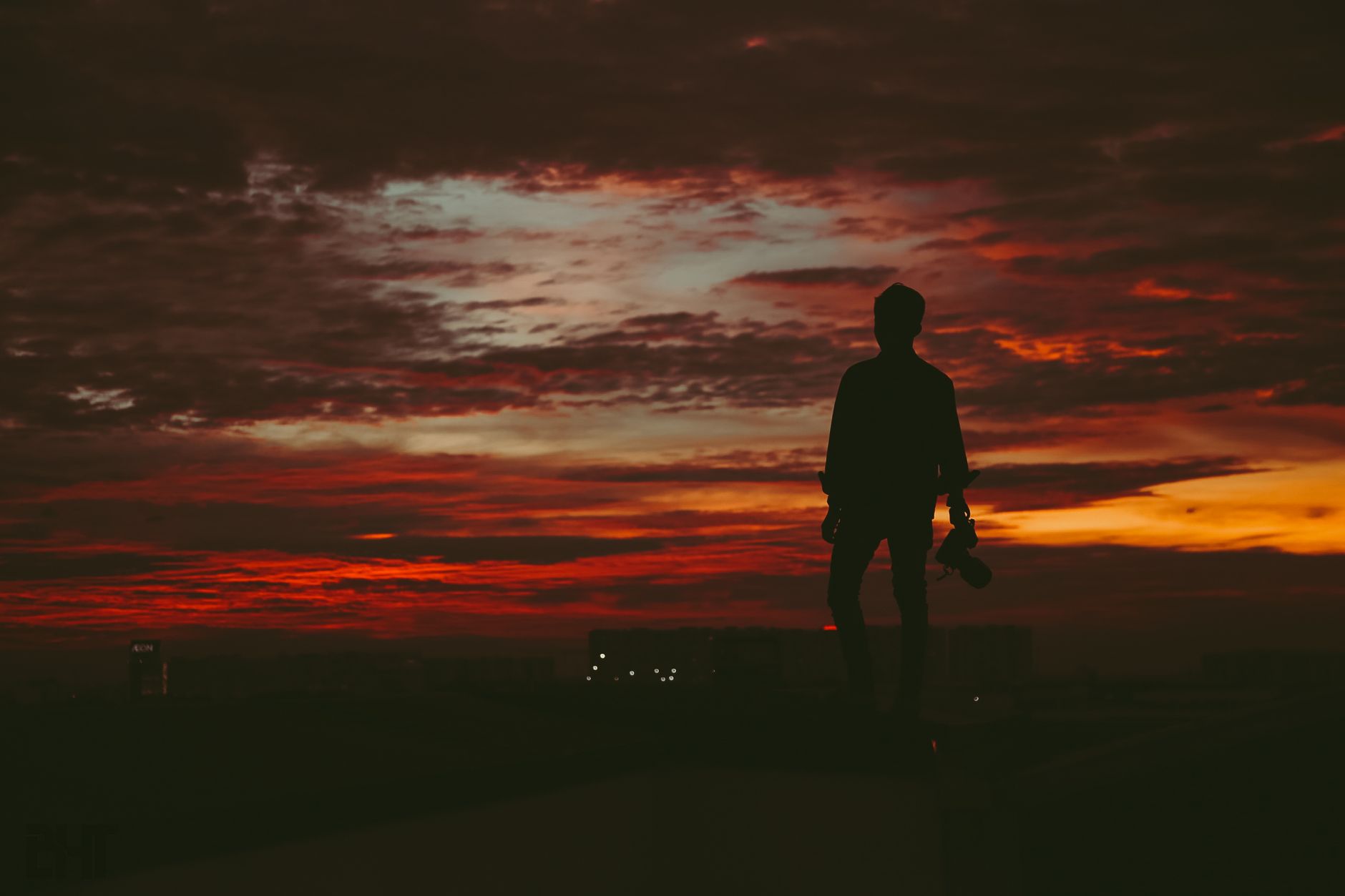
1. Cyber City skyline from Kingdom of Dreams overpass
The pedestrian overpass and adjacent flyovers near Kingdom of Dreams give the cleanest Cyber City skyline shot you can get without a drone. At blue hour — the twenty minutes after sunset in winter — the office towers light up unevenly across the frame, and the road below streaks with headlights if you set 6 to 15 seconds on a tripod. Shoot westward from the pedestrian bridge near the Sikandarpur metro side. The composition works because Cyber City is unusually dense — 30-plus glass towers within a kilometre — which is not something the rest of Gurugram delivers.
Ranks first because it is the shot that says Gurugram most clearly, and it is repeatable — you can go three nights running until conditions are right. Bring a proper tripod; phone HDR does not resolve the light spread. Winter blue hour hits 5:50 pm in December, 7:10 pm in June. Cabs from central Gurugram run ₹285 to ₹475. The overpass gets some pedestrian traffic but never crowded photography, so a full setup is fine. Do not shoot from the road itself; drivers are not looking for you.
2. Sultanpur National Park watchtowers
Sultanpur is the best wildlife photography location within a hour of the city, no meaningful competitor. From November to February, the wetland fills with painted storks, spoonbills, cranes, ducks, and periodically flamingos. The four watchtowers around the bund are set up specifically for long lenses; the middle two on the far side of the loop are the pick because they face west and give you late-afternoon light on the water.
You need a 300 mm minimum, 500 mm or more ideally, and a tripod or beanbag on the tower railing. Serious birders arrive at 6:30 am gate opening; you should too, because the birds work the shallows in the first two hours and disappear by 10. Entry is about ₹95 for foreigners with a camera fee of another ₹190 for anything above phone. Ranks second because the yield is genuinely exceptional but the season is narrow — outside Nov-Feb, the water shrinks and the birds go elsewhere.
3. Old Gurugram markets
The lanes around Sadar Bazaar in Old Gurugram are the street photography of the region. Fabric shops, sweet-makers frying jalebis at dawn, mechanics working on the pavement, chai stalls with plastic stools. It is not a tourist quarter — the light is uneven, the crowds real, the surfaces grubby in a way that photographs well. Best time is 7 to 9 am when the market opens and the sun is low; after 11 it becomes hot and hard.
Shoot with a 35 or 50 mm equivalent; longer lenses feel intrusive here and shorter ones distort. Ask before photographing individual people at close range — most will say yes with amusement, some will decline, and both responses matter. Vendor stalls and street activity are open game. This is not a place for a big camera bag; carry one body and one lens. Cabs from Cyber City run about ₹571. Metro to Sikandarpur then auto is cheaper and often quicker. Ranks third because the yield per hour is very high but the subject requires you to actually engage.
4. Aravalli Biodiversity Park at dawn
The Aravalli Biodiversity Park photographs surprisingly well at first light — 6 to 7:30 am in winter — because the low sun cuts through the scrub and picks out the ridges. The interior tracks give you compositions of restored native forest with none of the surrounding city in frame, which is a rare thing this close to Cyber City. The birdlife is real: over 200 species logged, with paradise flycatchers, sunbirds and yellow-throated bulbuls all photographable on a good morning.
You want a 70-200 mm zoom for birds and a wider lens for the landscape shots at the park's ridges. Tripods are allowed but drones are not. Entry is free but the gate opens at 5:30 am — get there right on opening for the light. Ranks fourth because it is easy, near, free, and reliably productive. The catch is that everyone else discovered this too and there are morning walkers on the main paths; go to the less-used inner loops for photography without joggers in every frame.
5. Damdama Lake at sunrise
Damdama at 6:30 am in winter gives you mist over water, the Aravalli ridge line behind, and often a hot-air balloon or two lifting off the far side. Shoot from the eastern bank looking west back toward the balloons and hills. The mist burns off by 8 am so this is not a lie-in kind of shot. Combining Damdama sunrise with the ridge walk described elsewhere on this site makes a serious morning of it.
Ranks fifth because the drive is 45 minutes each way, so this is a full-morning commitment for one main shot, not an easy grab. Winter only — outside November to February the mist does not appear reliably. Weekends are worth avoiding by 9 am when jet-skis start. A wide-to-normal lens covers it; a long lens is useful for isolating balloons and distant boats. Cabs are about ₹1141 each way; a driver on wait for a three-hour session runs about ₹2853 total.
6. Sohna hills ridge
The Shiva shrine ridge above Sohna town gives you the eastern-facing landscape shot with the biggest sky in the region. Sunrise is the pick — the plains toward Palwal light up in bands, and the ridge itself is dark rock and dry grass in the foreground. The climb is 20 minutes and steep at the top. Take one body, one 24-70 mm or equivalent, and a light tripod. Longer lenses are not the shot here.
Ranks sixth because it is an hour's drive from central Gurugram and the shot works only in winter when the haze permits distant landscape. In good conditions (December mornings after a rain) you get properly clear layers to the horizon; in normal winter you get haze. Pair with The Westin Sohna if you are staying there and you have the location on the doorstep. The pilgrim path is used by locals so a discreet setup is polite; do not block the shrine.
7. Kingdom of Dreams exterior at night
Kingdom of Dreams itself, the lit-up palace-styled entertainment building near Sector 29, photographs well at night in a specifically kitsch way that is worth one frame. The Instagram crowd all shoot the same angle from the front steps; a longer lens from the far side of the road gives you something less obvious. Ranks last because it is one shot, not a spot to spend an hour, but it is the picture that most non-photographers will recognise as Gurugram.
Pair with dinner at Sector 29 to make it a use of an evening rather than a special trip. Blue hour is right for it, when the sky is still holding some colour against the lit facade. Fully dark and the sky goes flat black behind. Cabs from anywhere in central Gurugram ₹285 to ₹475. Do not shoot inside without permission; do not fly a drone anywhere near, the venue and the wider MG Road area have restrictions. Ten minutes on location is enough.
What actually to bring
One body, two lenses maximum — a 24-70 mm equivalent and a 70-200 or 100-400 for wildlife. A proper tripod for anything at blue hour or 6 seconds and up; a beanbag for the Sultanpur towers. Extra battery in winter mornings; the cold drains them faster than you expect. A polariser is useful for the Aravalli landscape shots but pointless for street or blue hour.
Drones: Gurugram airspace is broadly restricted because of proximity to IGI Airport and multiple government installations. Do not fly without a permit and even with one, expect problems. Photography permits inside museums and monuments are a mixed picture — most charge ₹190 to ₹475 per camera. Nobody cares about phones anywhere. Insurance for serious gear is worth having; theft from cabs and cafes is rare but happens, particularly at 32nd Avenue and Sector 29 on weekend nights.
Good to know
Questions, answered
Are drones legal in Gurugram?
Broadly no. Gurugram falls within restricted airspace around IGI Airport and near several government and military installations. Commercial permits exist but require paperwork through the DGCA that no visiting hobbyist will complete in time. Ground photography is unrestricted at all seven sites above except inside private premises like malls.
What is the best month for photography?
November through February for everything on this list. October is warming up but usable. March haze reduces landscape clarity. April to September is a mix of heat and monsoon light that only works for street and interior photography. December mornings after a rain are the single best conditions of the year.
Are there any indoor spots worth including?
The lobbies of The Oberoi and The Leela Ambience are photogenic but private property; ask before setting up. Kingdom of Dreams interior is a ticketed venue with restrictions. The Museo Camera in Gurugram sector 23 has a small collection of photographic history but permission for shooting inside is by request. For controlled indoor conditions, hotel bars at Grand Hyatt and Hyatt Regency work well.
Is street photography sensitive around religious sites?
Yes. Do not photograph inside mosques, temples or gurdwaras without explicit permission, and never during prayer. Photograph the exterior architecture freely. Do not photograph women in traditional dress without asking. Old Gurugram has both a large Hindu temple and mosque within the market area; ask before shooting close by.
Doing good is the business: every booking through Stay Gurugram funds one verified tonne of carbon removal — same room, same price, no markup.
Start your search