
The 4 km rule
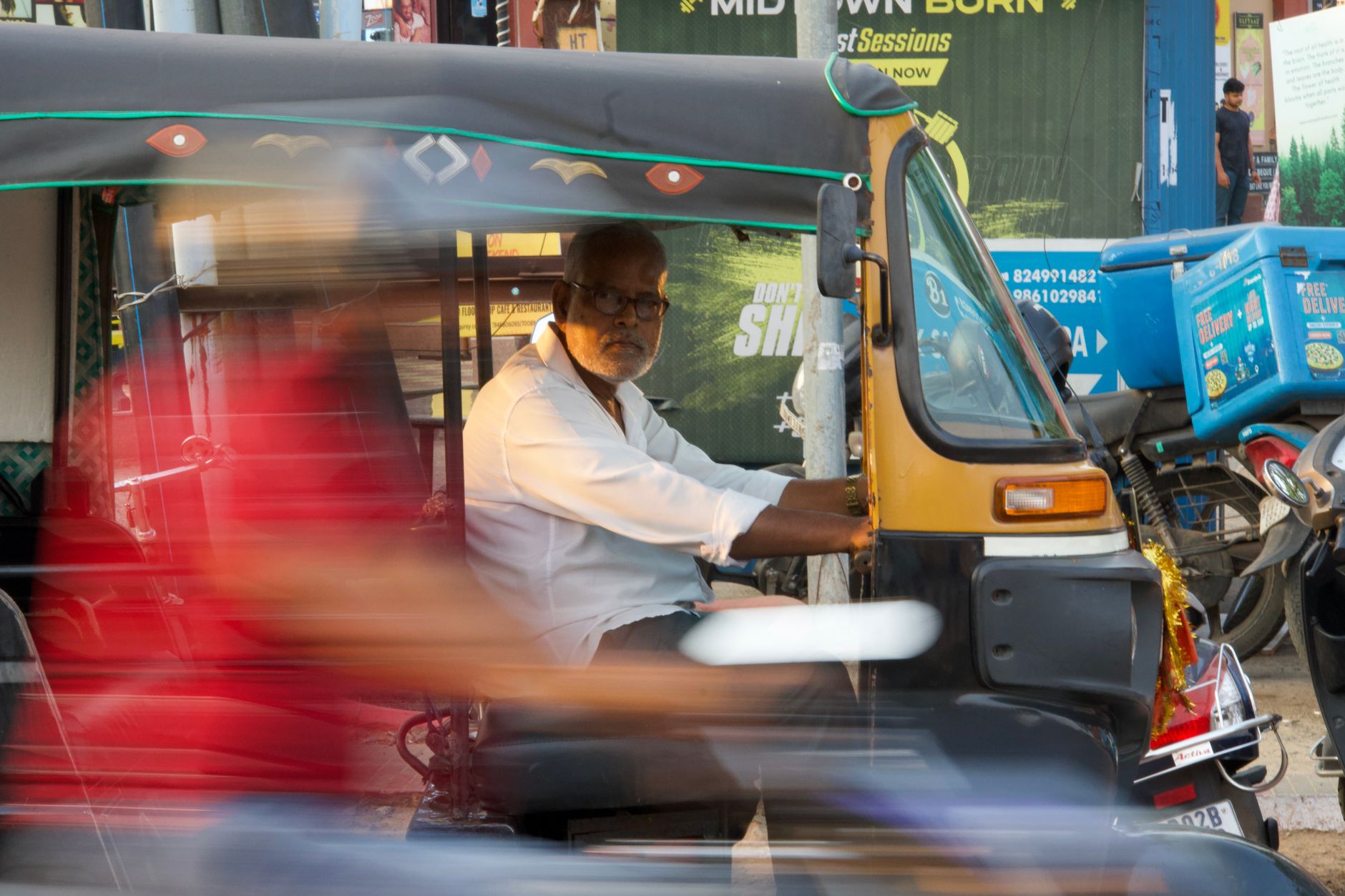
The single most useful rule I can give a first-timer: under 4 km, take an auto; over 4 km, take an Uber or Ola cab. Autos win short hops because they slip through the service-road chaos on Golf Course Road, MG Road and Sohna Road while cabs sit behind SUVs waiting for a gap. A three-wheeler from Sikanderpur metro to Cyber Hub is about ₹114 and ten minutes; the same ride in an Uber Go is ₹285 and can take twenty when the DLF Phase 3 signals lock up around 6.30pm. The auto also drops you at the actual gate, not the drop-off ramp 300 metres away.
Above 4 km the maths flips. Autos are open to the air, which matters when PM2.5 sits over 200 in November or when it's 43°C in May. Cabs give you AC, a seatbelt, a GPS trail your family can see, and a driver who doesn’t need directions to Ambience Mall. For a Cyber City to Golf Course Extension Road run, roughly 9 km, budget ₹380-₹571 in an Uber Go against ₹285-₹380 in an auto that will take longer and leave you sweating. The comfort premium is worth it.
Uber, Ola, Rapido — what each is actually good at
Uber is the default and the most reliable in Gurugram. Uber Go for solo trips, Uber Premier when you want a sedan for the airport with room for a suitcase, Uber Auto to book a metered three-wheeler without the fare argument. Ola is a close second and sometimes cheaper on surge; keep both apps installed and price-check before you tap. Ola's outstation product is genuinely useful if you want a car to Neemrana or Alwar for the day — around ₹5230-₹7132 including driver, fuel and one state toll.
Rapido is the bike-taxi and auto app locals actually use for short hops. A Rapido bike from Huda City Centre metro to Sector 29 is roughly ₹76 and five minutes flat, versus ₹190 and fifteen in a cab. I don’t recommend the bike for anyone with a suitcase, in a saree or salwar, or unfamiliar with Delhi-NCR traffic — helmets are provided but the lane discipline is optimistic. Rapido Auto, though, often finds you a three-wheeler faster than Uber Auto and at the same price.
The metro is genuinely useful — for a narrow set of trips
Gurugram has two metro lines that matter: the Yellow Line from Delhi terminating at Huda City Centre, and the elevated Rapid Metro loop that links Sikanderpur to Cyber City via Phase 2 and Phase 3. Together they cover the corridor most business visitors care about — airport-adjacent Delhi to Cyber Hub — for under ₹95. From IGI Terminal 3 you take the Airport Express to New Delhi, change to the Yellow Line, ride to Sikanderpur and switch to Rapid Metro. Around 75 minutes, ₹143, and you skip every traffic jam.
What the metro doesn’t do: it doesn’t touch Sohna Road, Golf Course Extension Road, Manesar, Palam Vihar, or most of Old Gurugram. If your hotel is on Sohna Road past Subhash Chowk, the metro gets you within 4 km at best and you’ll still need an auto for the last leg. Check the map before you commit — a hotel that looks metro-accessible on a booking site can still be a ₹380 auto from the nearest station, which erases the saving.
The airport transfer question
IGI Terminal 3 is 12-22 km from most Gurugram hotels depending on where you’re staying. From Udyog Vihar or DLF Phase 3 it's 20-30 minutes and ₹761-₹1141 in an Uber Premier at non-peak hours. From Golf Course Extension Road or Sohna Road allow 45-60 minutes and ₹1141-₹1521. Between 4pm and 8pm on a weekday, add 30 minutes to whatever the app says — the NH-48 service roads back up hard around Rajokri and the airport link.
Hotel-arranged transfers cost ₹2377-₹4279 for the same route in a sedan with a uniformed driver, bottled water and someone waiting at arrivals with a sign. For a late-night landing after a long flight, or if you’re travelling with elderly parents, that premium buys real peace of mind. For a solo business traveller who lands rested at 10am, it's a waste. The prepaid taxi counter inside Terminal 3 is fine too — around ₹951-₹1331 to Cyber City, fixed price, no surge, but the wait can be 20 minutes.
Driving yourself: don’t
Rental cars with self-drive exist — Zoomcar and Revv are the two apps — and I recommend them to almost nobody visiting Gurugram. Lane discipline is a suggestion, indicators are decorative, and a scratch on a returned car turns into a ₹14263 dispute you’ll settle from another country. Parking at malls is fine but parking near Sadar Bazaar or Kingdom of Dreams is a genuine expedition. Insurance excesses are high and dashcam footage is your only defence.
Hire a car with driver instead. Any hotel concierge can arrange one for ₹4279-₹6181 a day including 80 km and eight hours, fuel and driver batta extra for outstation. That covers a full day of sightseeing across Delhi and Gurugram with a driver who knows which flyover to take at 5pm. For a day trip to Neemrana, Sariska or Alwar the same package is ₹5705-₹8558. It's the single best-value transport decision you can make for a family of four.
What doesn’t exist here, and stop looking for it
Gurugram has no tram, no ferry, no water taxi and no meaningful cycling infrastructure beyond the private loops inside DLF Phase 5 and Aravalli Biodiversity Park. There is no equivalent to London's night tube — the metro shuts around 11pm and starts around 6am. There are no walking-only zones except Kingdom of Dreams frontage and small stretches inside Cyber Hub and Sector 29. Do not plan a day around strolling from one attraction to the next; the distances and the road crossings will defeat you by lunch.
City buses exist and locals use them, but as a visitor you will spend more time decoding routes than you would save on fare. The DTC and Haryana Roadways buses that ply NH-48 are useful for Manesar or Neemrana if you’re on a proper backpacker budget — ₹95-₹285 for the same trip an Uber does for ₹2377 — but you’ll queue with commuters, no AC on many routes, and no English signage. Skip them unless the adventure is the point.
Timing everything around the two rush hours
Gurugram traffic has two hard peaks: 8.30-10.30am inbound to Cyber City, and 5.30-8.30pm outbound. Inside those windows, add 50-100% to any Google Maps estimate. A 20-minute midday trip from Sector 29 to Cyber Hub becomes 45 minutes at 6.15pm on a Wednesday. Friday evenings are worse — the whole city seems to drive home at once and the Signature Tower to Iffco Chowk stretch becomes a car park. If you can shift a meeting to 11am or a dinner to 9pm, do it.
The counterintuitive good news: Sunday mornings until about 11am are the best driving conditions of the entire week. Roads that take 40 minutes on a Tuesday take 15 on a Sunday. This is the window to see Sultanpur Bird Sanctuary, drive the Aravalli loop, or move between hotels if you’re changing bases. Saturday nights are the worst restaurant traffic — book the 7pm slot at Sector 29 or the 9.30pm one, never 8.15pm, when every valet is buried.
Good to know
Questions, answered
Do auto-rickshaw drivers use the meter?
Rarely, and haggling from cold is a bad game to play. Use Uber Auto or Rapido Auto to book at a fixed app price — around ₹76-₹190 for most short trips. If you hail from the street, agree the fare before getting in, and expect to pay 20-30% more than the app rate.
Is the metro safe at night for a solo woman traveller?
Yes, and better than most alternatives. Every train has a women-only front carriage, stations are staffed, CCTV is real and the last service runs around 11pm. The walk from the station to your hotel is the weaker link — book an Uber for that last kilometre after 9pm rather than walking service roads.
Can I pay for autos and cabs with a card or UPI?
Uber and Ola bill your saved card or wallet — you don’t touch cash. Street autos are cash or UPI; every driver has a scannable QR code taped to the dashboard. Foreign cards can’t run UPI, so keep ₹951-₹1426 in small notes for hailed autos, tips and the occasional cash-only vendor.
Doing good is the business: every booking through Stay Gurugram funds one verified tonne of carbon removal — same room, same price, no markup.
Start your search