
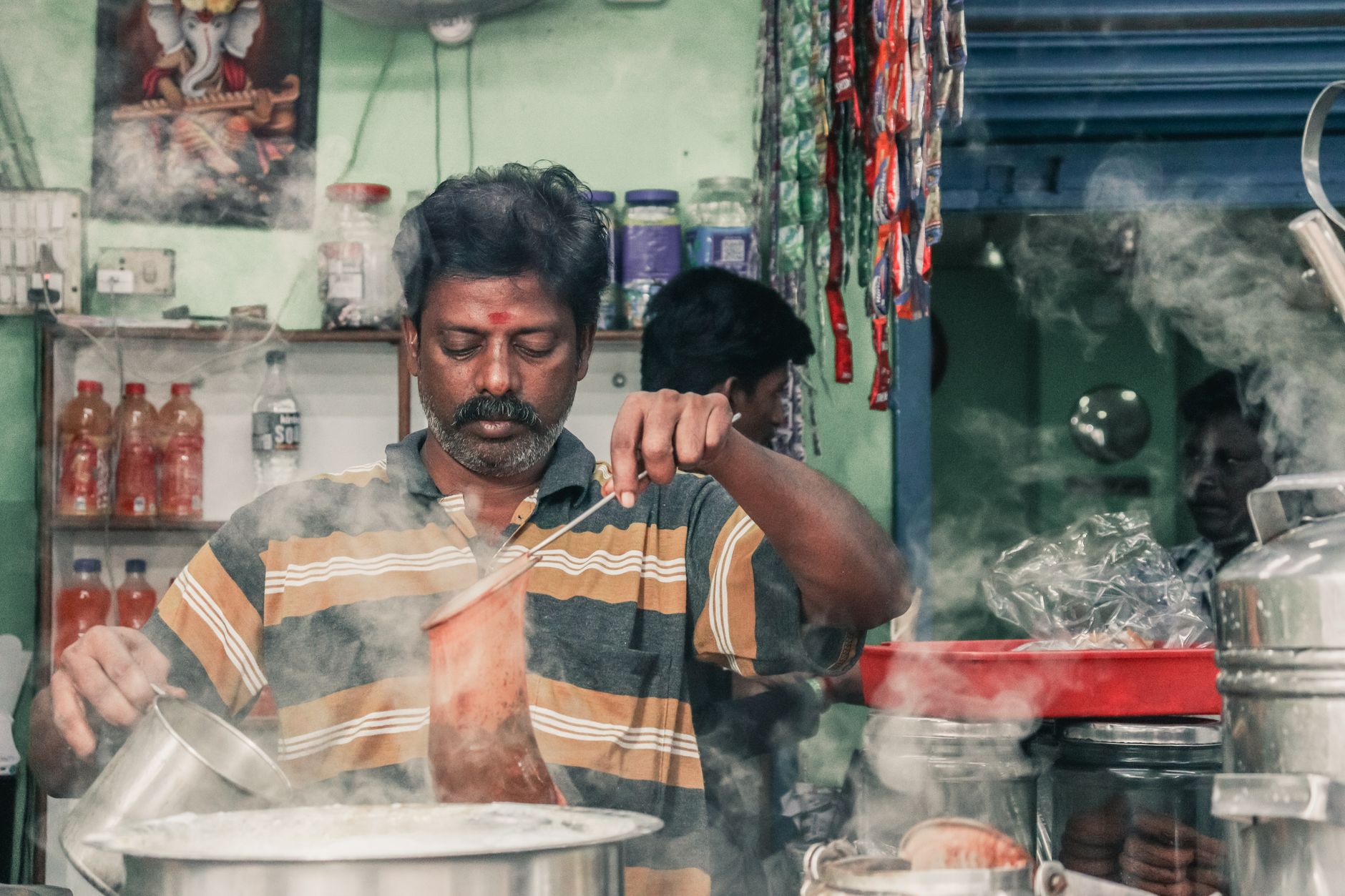
The one phrase that changes everything: 'kitna hai?'
'Kitna hai?' means 'how much is it?' and it's the single most useful piece of Hindi a visitor to Gurugram can learn. It works at chai stalls, in autos where the app isn’t running, at fruit vendors, at Sadar Bazaar stalls, at temple flower sellers. The reason it matters isn’t that vendors won’t tell you the price in English — most will — but that asking in Hindi signals that you’re not a first-week tourist, and the price you get quoted drops accordingly. Sometimes by 20%, sometimes by nothing, but never by a negative amount.
Pair it with 'bahut mahenga hai' — 'that's very expensive' — and you have the opening moves of any bargaining conversation in Sadar Bazaar or Farrukhnagar. Say it with a smile, not with edge. The counter-offer game in Delhi-NCR is about relationship, not confrontation, and the vendors who charge 3x are the ones who’ve decided you don’t know the game. Two phrases and a smile move you out of that category. That's the entire trick.
The directions phrases
'Idhar' means 'here' — as in 'stop here', to an auto driver. 'Udhar' means 'there'. 'Seedha' is 'straight', 'left' is 'baaen', 'right' is 'daaen', and 'rukiye' is 'please stop'. You will not need any of these in an Uber, where the driver has GPS and English support. You will need them in an auto you hailed from the street, or in a hotel car when the driver has taken a wrong turn, or when you want to be dropped 50 metres short of the actual pin because the traffic is bad.
The one that saves the most awkwardness is 'yahan rukiye' — 'stop here'. Auto drivers routinely drive past the destination because the pin was 20 metres off, and 'yahan rukiye' shouted at the right moment saves you a five-minute walk back through traffic. Don’t worry about pronunciation; every driver in Gurugram has heard these phrases mangled by every accent on earth and understands them cheerfully. The effort matters more than the fluency.
The food phrases that matter
'Thoda tez' means 'a little spicy', 'kam tez' means 'less spicy', and 'bilkul nahi tez' means 'not spicy at all'. In hotel restaurants and Cyber Hub chains, the default heat level for tourists is already toned down. In smaller places — Sadar Bazaar dhabas, roadside stalls, family restaurants in Old Gurugram — the default is what locals eat, which is genuinely hot for most non-Indian palates. Ask before ordering, not after tasting.
'Meetha' is sweet, 'namkeen' is savoury/salty, 'garam' is hot (temperature), 'thanda' is cold. 'Pani' is water — 'bottle band' means 'sealed bottle', which is what you want, and any decent restaurant will bring it unopened. 'Chai' you know, but 'kadak chai' is a strong, well-boiled version and 'phika chai' is weak with less milk. Try the kadak version at least once from a stall — around ₹29 — and understand what half the country is drinking three times a day.
The politeness layer
Hindi has a formal-informal register that English doesn’t. Using 'aap' rather than 'tum' when addressing anyone older than a child, and adding 'ji' after a name or a role — 'driver-ji', 'bhai-ji' — signals respect and gets you significantly better service. 'Bhai' means brother and is the standard address for men roughly your age or younger; 'didi' is sister, for women. 'Uncle' and 'aunty' in Indian English serve the same warmth for anyone older, and are used constantly.
'Dhanyavad' is the formal thank-you but you’ll rarely hear it in Gurugram — 'thank you' in English is universal and normal. What people do use is 'shukriya' in slightly warmer register. More useful is 'koi baat nahi' — 'no problem, don’t worry about it' — which you’ll hear constantly and can deploy when someone apologises for a minor mishap. Learning these opens conversations. A driver whose 'bhai-ji' you use will tell you where to eat, and it’ll be better than TripAdvisor.
The 'no' vocabulary
'Nahi chahiye' means 'I don’t want it' and is your friend when hawkers approach at Kingdom of Dreams or outside monuments. Firmer is 'nahi, dhanyavad' — 'no, thank you' — said once, without eye contact after the first exchange, and then you walk. Extended engagement is what hawkers want; a definite 'nahi chahiye' and continued walking closes the interaction. The mistake tourists make is repeated 'no thank you' with continued eye contact, which reads as ongoing negotiation.
'Rehne do' means 'leave it, forget it, drop it' and is useful when a bargaining conversation isn’t working and you want to walk away with the option of coming back. Vendors will often lower the price as you turn. Or they won’t, in which case the price they had wasn’t for you. 'Bas' — literally 'enough' — is what you say when a waiter is still ladling curry into your plate and you want him to stop. Firm, one syllable, no offence given.
What you don’t need to learn
You don’t need numbers beyond one to ten, and you don’t really need those — Delhi-NCR runs on English numerals for prices, and vendors will show you the digits on their phone if there's confusion. You don’t need verb conjugations, past tenses, or the honorific plural. You don’t need to learn Devanagari script; every sign that matters to a visitor is in English too. You don’t need to worry about Punjabi or Haryanvi variations — Gurugram's working Hindi is Delhi Hindi, and it's the version every phrasebook teaches.
The learning ceiling for a week-long visitor is about 20 phrases, and after that the marginal return drops sharply. Focus on 'kitna hai', 'yahan rukiye', 'thoda tez / kam tez', 'nahi chahiye', 'shukriya', 'bhai-ji', and 'koi baat nahi'. Deploy those cheerfully across a week and you will have more genuine conversations than tourists who tried to learn 200 phrases and used none of them because they weren’t confident in any. Confidence in seven beats hesitation in seventy.
Where English is actually enough
In hotels, Cyber Hub restaurants, Sector 29, the malls, Uber rides, the airport, medical facilities, spas, and any business context — English is not just adequate, it's the working language. The staff at the Oberoi, Trident, Leela Ambience, Hyatt, Grand Hyatt, Westin and Le Meridien are trained to a standard that would embarrass most London hotels. Menus are in English, signage in Cyber City is in English, and business meetings in Gurugram are conducted in English by default even when everyone in the room speaks Hindi natively.
Where English thins out is in Old Gurugram markets, at chai stalls and street food vendors, with autos hailed from the street rather than the app, and with security guards and cleaners in residential areas. In those places, a few Hindi phrases move you from awkward pantomime to actual exchange. Nowhere in Gurugram will you be genuinely stuck without Hindi — but you’ll have a more textured trip if you make the small effort. That's the honest answer to the language question.
Good to know
Questions, answered
Do I need to learn Devanagari script?
No. Every sign that matters — road signs, restaurant menus, metro maps, mall directories — is in English alongside the Hindi. Autos have their number in Latin digits on the back. Learning the script is a lovely long-term project and totally unnecessary for a one-week trip.
Will people mind if I mispronounce things?
The opposite — they’ll be delighted you tried. Delhi-NCR is used to Hindi being spoken with every accent from Boston to Bogota, and effort is universally rewarded with warmth. The worst outcome is a laugh and a correction. Don’t let pronunciation anxiety stop you from using the phrases above.
Is Google Translate reliable for Hindi in Gurugram?
Reasonably, for simple sentences. It gets the grammar roughly right and the vocabulary about 85% right. For anything nuanced — medical, legal, or the difference between 'a little' and 'not at all' — verify with a person. The voice input works well; the camera translation on menus works less well than you’d hope.
Doing good is the business: every booking through Stay Gurugram funds one verified tonne of carbon removal — same room, same price, no markup.
Start your search