
The short answer
Gurugram is one of the most English-fluent cities in India. Corporate Cyber City runs in English; hotel staff at any four-star property speak it fluently; restaurant menus at everything above the neighbourhood dhaba are in English; and Uber, Zomato, Swiggy and every app you will use operate in English by default. A visitor with no Hindi at all can spend a week here without hitting a wall. This is a genuine outlier in the region — Old Delhi, rural Haryana or a village 40 km south will not be like this.
The remaining 10% is where you meet autorickshaw drivers, small-shop owners, vegetable sellers, and older service staff outside the corporate zones. Here Hindi ranges from basic to broken-English, and a dozen words on your side smooths every interaction. Learning them is not required, but it changes how people treat you: the price offered drops, the smile arrives sooner, and the sense of being a paying outsider softens into being a guest who is trying.
The dozen words worth learning
Namaste — hello, universal, works everywhere. Dhanyavaad — thank you, formal. Shukriya — thank you, casual, more common in Delhi-Gurugram than in the south. Kitna — how much? Bahut — very. Accha — good, or an acknowledgement like "I see". Nahi — no. Haan — yes. Theek hai — okay, fine, agreed. Paani — water. Chai — tea. Bill — bill (same word). Chhota, bada — small, big.
With these you can navigate almost any market interaction. "Namaste, kitna?" opens a stall. "Bahut mehenga, nahi" — too expensive, no — starts a bargain. "Theek hai, dhanyavaad" closes it. Numbers matter too: ek, do, teen, char, panch, chhe, saat, aath, nau, das (1-10). Even Hindi numbers pronounced badly are understood, and using them at a market signals you are not a first-day tourist to be quoted the visitor price. Do not try longer sentences until you have these solid.
Regional accents and what you will actually hear
Indian English in Gurugram carries specific vocabulary that trips up first-time visitors. "Prepone" means to reschedule earlier — the opposite of postpone. "Do the needful" means please handle this. "Kindly revert" means please reply. "Passing out" means graduating from a university. "Only" appears at the end of sentences for emphasis: "I live in Delhi only." "Yaar" is friend, sprinkled through casual conversation. "Achha" (with an h) also gets used in English sentences to mean okay or really.
Numbers use lakhs (100,000) and crores (10 million) not millions and billions. A hotel priced at "one lakh a night" is ₹114105; a Gurugram apartment at "2 crore" is ₹22821022. Property prices, salaries and government budgets are always quoted this way; converting in your head is a skill that comes fast. Distance is in kilometres; temperature in Celsius; weight in grams and kilos. Fuel is in litres. Nothing here uses imperial; do not expect to see miles or ounces on any menu or sign.
When English fails
Three situations regularly break the English default. First, older autorickshaw drivers, especially in Old Gurugram and Sadar Bazaar, who may understand destination names but not detailed directions. Show the address in Hindi from Google Maps (there is a Hindi toggle) or write down the landmark. Second, security guards at residential complexes, who often understand "visiting who" but struggle with anything conditional. Third, small shopkeepers, where a Hindi number for the price is more reliable than an English one.
The fix in all three is the phone. Google Translate's Hindi mode is genuinely good for short exchanges, though slower than gesture and pointing. WhatsApp voice notes bridge the gap when a driver calls to find you; if you cannot understand him, send back "Hindi mein WhatsApp karo" (WhatsApp me in Hindi) and let Google Translate do the work. Almost every service person in Gurugram uses WhatsApp fluently and will switch to it happily. Do not try to sustain a phone call in broken Hindi; move to text.
Signage: reading the city
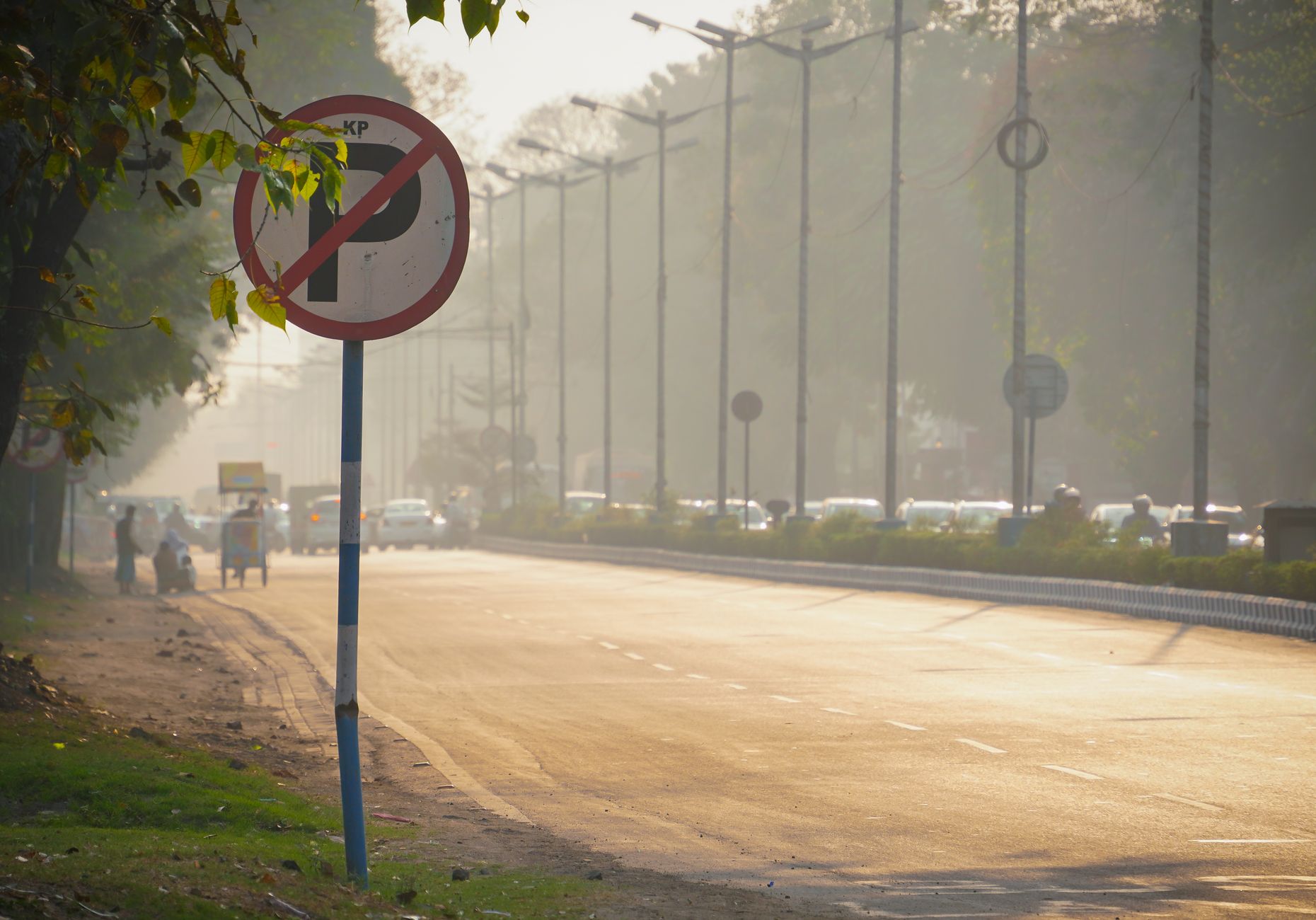
Public signage in Gurugram is bilingual by policy — Hindi in Devanagari script and English in Roman — on metro stations, expressway exits, government buildings and major road signs. Restaurant and shop signage is more variable: chain stores are English-only, older neighbourhood shops may be Hindi-only in Devanagari. Menus at anywhere above ₹571 a meal will be English; below that, they may be Hindi with photos, and photos are the more reliable guide because dish translations vary.
Learning to recognise a few Devanagari characters helps unexpectedly. The metro symbol for exit (निकास, nikās), for women's compartment (महिला, mahilā), and for the men-only queue signs at security is worth a five-minute study before you land. Street numbers, sector numbers and phone numbers are always in Arabic numerals you already know. Currency is written as ₹ before the number: ₹500 is 500 rupees, about ₹571. There is no ambiguity to translate.
What not to say, and what not to translate literally
Do not open with a joke. Indian English humour skews wordplay and situational, and imported sarcasm reads as either confusing or rude. Do not use "cheers" as thanks — it is a drinking word here. Do not call anyone "chief" or "boss" as a friendly form of address; it sounds condescending. "Sir" and "ma’am" are used far more than in Western workplaces and are neutral, not sarcastic. First names arrive later in a conversation than they would at home.
Do not translate "just" and "actually" literally. "I just wanted to ask" sounds hesitant in a way that does not land; use "could you" or "I would like to". Do not compliment women you do not know on their appearance — a habit that is casual in parts of Europe reads as a warning here. Do not pat children on the head in temples or markets; it is not a friendly gesture in India, and parents will move the child away. Small stuff, but the small stuff is 90% of language.
Apps and services that translate for you
Google Translate with offline Hindi downloaded before you arrive handles most one-off situations. The camera-translate mode reads signs and menus in real time and is astonishingly good on printed Devanagari; less reliable on handwritten shop signs. Google Maps in Hindi mode shows Hindi script for search suggestions, which you can then hand to a driver. Bhashini, the Indian government's language app, offers voice translation across 22 official languages and is free; it handles regional accents better than Google.
For longer interactions — a driver briefing for a Sariska trip, a doctor's appointment, a complicated shopping visit — hotel concierges will translate for you free at any four-star property. If you are staying at a hostel or a budget hotel in Old Gurugram without concierge service, WhatsApp your host with the situation and let them broker it in Hindi. The visitor-solves-alone instinct is worth putting down here; language is a service the hospitality industry provides.
Good to know
Questions, answered
Do I need to learn any Hindi before I come?
No, but it helps. English gets you through hotels, restaurants, apps and Cyber City effortlessly. A dozen Hindi words — namaste, dhanyavaad, kitna, nahi, haan, theek hai, and the numbers 1-10 — soften every interaction with drivers, market sellers and older service staff. Half an hour of learning pays back for a week.
Is Google Translate reliable for Hindi?
For short phrases and signage, yes. For extended conversation, no — grammar breaks down and the output can be unintentionally rude. Use it for menus, signs and one-liners. For anything more complicated ask your hotel to help, or use voice messages on WhatsApp with a driver where both sides can translate their own turn.
Will my accent be a problem?
Not in Gurugram. The city hears every accent daily from Cyber City call centres and multinationals. British, American, Australian, European and East Asian accents are all recognised without effort. Speak a bit slower than at home and drop contractions — "I would like" rather than "I’d like" — and you will be understood almost anywhere.
Doing good is the business: every booking through Stay Gurugram funds one verified tonne of carbon removal — same room, same price, no markup.
Start your search