
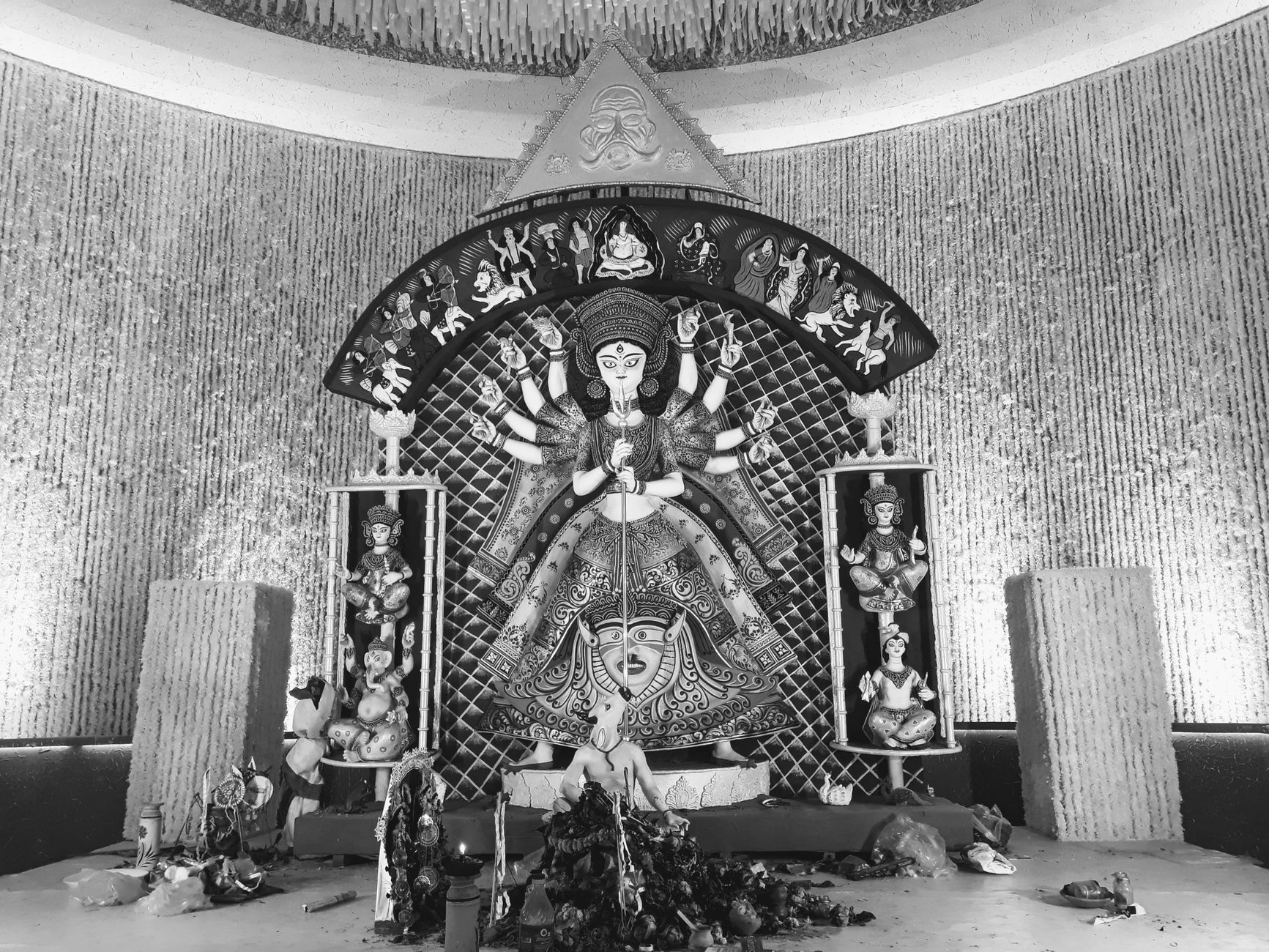
The October festival that hides in plain sight
Sharad Navratri in 2026 runs 11 to 20 October, with Vijayadashami (Dussehra) on 20 October. It is a nine-night Hindu festival built around fasting, community worship and, in the Bengali diaspora that has settled heavily in Gurugram since the tech boom, Durga Puja pandals from Saptami (17 October) through Dashami (20 October). Unlike Diwali, Navratri does not stop the city — offices run, malls run, flights run — but it changes what you eat, what you drink, and what half the buffets serve.
Roughly 30-40% of Gurugram's population observes some form of fasting for these nine days. Alcohol sales at government-run stores technically continue but many hotel restaurants voluntarily reduce their liquor promotion. Bhog and sattvic menus (no onion, no garlic, no non-vegetarian food, often no grains other than kuttu buckwheat and singhara water-chestnut flour) appear on almost every hotel restaurant menu. If you want to eat a rare steak on 15 October, you can — but you will be one of six people in the restaurant.
The Bengali Durga Puja circuit in Gurugram
Gurugram's Bengali community, concentrated in DLF Phase 1, DLF Phase 3 and Sushant Lok, runs half a dozen serious Durga Puja pandals from Panchami through Dashami. The main ones — CR Park Kali Bari (technically in Delhi but the closest major puja to Gurugram), the DLF Phase 3 Bengali Association pandal, and the Sushant Lok Sarbojanin Durgotsav — draw 5,000 to 15,000 visitors each on Ashtami night (17 October 2026, Saturday). Music, dhaak drums, community meals of khichuri and labra vegetables.
For a visitor, this is one of the best free cultural experiences in the region and it is invisible to most tourist guides. Go between 6pm and 10pm on Ashtami or Navami (17 or 18 October), dress modestly, take off your shoes at the pandal entrance, and eat the community bhog if it is offered — it is prasad and refusing is impolite. Uber from central Gurugram to the DLF Phase 3 pandal is roughly ₹380 and takes 15 minutes if the roads are clear.
The Dandiya and Garba scene
The Gujarati and Rajasthani community celebrates the same nine nights with Garba and Dandiya dance evenings at private venues, farm-house parties in Sohna and Manesar, and ticketed events at hotels. Kingdom of Dreams runs Navratri Dandiya evenings from 12 to 19 October at ₹2853-₹4754 a head including dinner. The Westin Sohna Resort & Spa and Heritage Village Resorts & Spa Manesar Gurgaon host large-scale Garba nights on the middle Saturdays (11 and 18 October 2026) at ₹6656-₹8558.
These are ticketed, they sell out by early October, and they are genuinely fun even if you have never danced Garba. The music is live, the dress code is bright and traditional (women in chaniya choli, men in kediyu — you can rent both from shops around Sadar Bazaar for ₹1426-₹2377), and the food is Gujarati thali. Do not walk in cold; watch a two-minute Garba step video before you go and you will pick it up on the second circle.
Hotel rate movements
Navratri and Durga Puja produce a smaller demand spike than Diwali because domestic tourism does not surge — Bengalis fly home to Kolkata, Gujaratis to Ahmedabad. Business travel drops in the second half of the nine nights (17-20 October) as offices run at half strength. Weekend rates during the two Navratri Saturdays (11 and 18 October 2026) rise 15-25% above normal October due to the ticketed events at hotels, but weekday rates stay at October baseline of ₹11411-₹15214 for four-star and ₹16165-₹20919 for five-star.
Dussehra on 20 October is a national holiday, and many businesses take the four-day weekend from Saturday the 17th through Tuesday the 20th. This creates a small leisure demand spike similar to Independence Day. Book by August for the 17-20 October window if you want a specific hotel; anywhere else in the nine nights, two weeks' notice is fine. Ramlila performances at various venues (the main one in Delhi at Ramlila Maidan) run through 20 October's Ravana effigy burning.
What restaurants actually serve
Star hotel buffets during Navratri run a parallel sattvic menu — kuttu puri, singhara pakoras, sabudana khichdi, dahi-based curries, rock salt instead of table salt, no onion, no garlic, no meat. The regular menu continues alongside for guests who are not fasting, but expect the buffet's non-vegetarian station to be smaller and the vegetarian section to be twice its normal size. This is a good time to eat serious Indian fasting cuisine done properly; the ITC properties (Welcomhotel by ITC Hotels Delhi Gurugram Highway), The Leela Ambience Gurugram Hotel & Residences and The Oberoi Gurgaon all do it well.
Standalone restaurants split. Bengali eateries run Puja-special menus with kosha mangsho mutton curry, shorshe ilish hilsa fish, and mishti doi sweet yoghurt on the last four days. Vegetarian Gujarati and Marwari restaurants pack out. Bars are quieter — Sector 29 sees 30-40% lower footfall on midweek Navratri nights, so it is a good time to actually get a table at Prankster or Downtown without a wait. Rooftop dinners are pleasant with October temperatures at 22-28°C in the evening.
The Dussehra day itself
20 October 2026 is Vijayadashami, or Dussehra. It is a national holiday, effigies of Ravana (the demon king from the Ramayana) are burned at outdoor venues across the city in the late afternoon and evening, and the day has a carnival atmosphere. Major Ramlila grounds — Baba Kharak Singh Marg in Delhi is the flagship, and there are neighbourhood versions in Sector 14, Old Gurugram and DLF Phase 3 — draw crowds from 4pm. Effigy burning is usually around sunset (6:15pm in late October).
For a first-time visitor, going to a Ramlila effigy burning is worth an evening. Take a taxi both ways, arrive by 5pm, expect crowds and firecrackers, and leave by 8pm before the roads get impossible. The Sector 14 Ramlila is closer for most Gurugram hotels than the Delhi ones and the crowd is manageable. Hotel restaurants offer Dussehra thalis on the 20th; the buffet at Trident Gurgaon or Hyatt Regency Gurgaon is a safe fallback if you are not up for the outdoor scene.
Should you plan a trip around Navratri?
Yes, if you want authentic seasonal Indian culture without the intensity and air-quality hit of Diwali. The nine nights are visually beautiful, the food is distinctive, the community pandals are welcoming to respectful visitors, and hotel prices barely move. Weather is at its best — 15-28°C, clear skies, low humidity. This is the second-best week of the year to be in Gurugram after early March, and unlike March, everything is open and running.
The one caveat: alcohol-forward travellers will find the atmosphere quieter than usual. If your idea of an Indian holiday is nightclub-heavy Sector 29 evenings, Navratri is not your window. If your idea includes eating hilsa fish at a Bengali pandal at 9pm on a Saturday under fluorescent lights while dhaak drums play, or dancing Garba in a rented chaniya choli, this is the trip. Book flights for 14-21 October 2026 and you get the middle and end of the festival with Dussehra day as a finale.
Good to know
Questions, answered
Can I drink alcohol during Navratri in Gurugram?
Yes, legally and practically. Hotel bars, standalone restaurants and Sector 29 clubs all serve normally. What changes is that many Indian guests are not drinking, so bars are quieter and some hotel restaurants reduce liquor promotion out of respect. Government liquor stores stay open. No formal restrictions apply the way they do on specific dry days elsewhere in the year.
Are the Durga Puja pandals open to non-Hindu visitors?
Yes, entirely. Puja pandals in Gurugram and Delhi are open to everyone — Hindu, non-Hindu, Indian, foreign. Dress modestly (covered shoulders and knees), remove shoes at the pandal entrance, do not photograph the priest during aarti rituals, and if bhog food is offered, accept it. The community atmosphere is genuinely welcoming to respectful outside visitors.
What is the best day of the nine to visit?
Ashtami (17 October 2026, Saturday) for the Bengali Durga Puja experience — the biggest pandal crowds, the best food, the peak dhaak drumming. Or 18 October (Navami Saturday) for a hotel Garba night. Dussehra on 20 October (Tuesday) is the finale with Ravana burning. If you can only pick one evening, Ashtami at a DLF Phase 3 or Sushant Lok pandal.
Do businesses close during Navratri?
Not the whole nine days. Offices run normally through 16 October. Many workers take leave for the 17-20 October long weekend, so business hotels see occupancy drops on the Monday and Tuesday of that week. Dussehra (20 October) is a full national holiday with government offices, banks, and post offices closed; most malls and hotel restaurants operate on reduced hours.
Doing good is the business: every booking through Stay Gurugram funds one verified tonne of carbon removal — same room, same price, no markup.
Start your search