
The basic geography
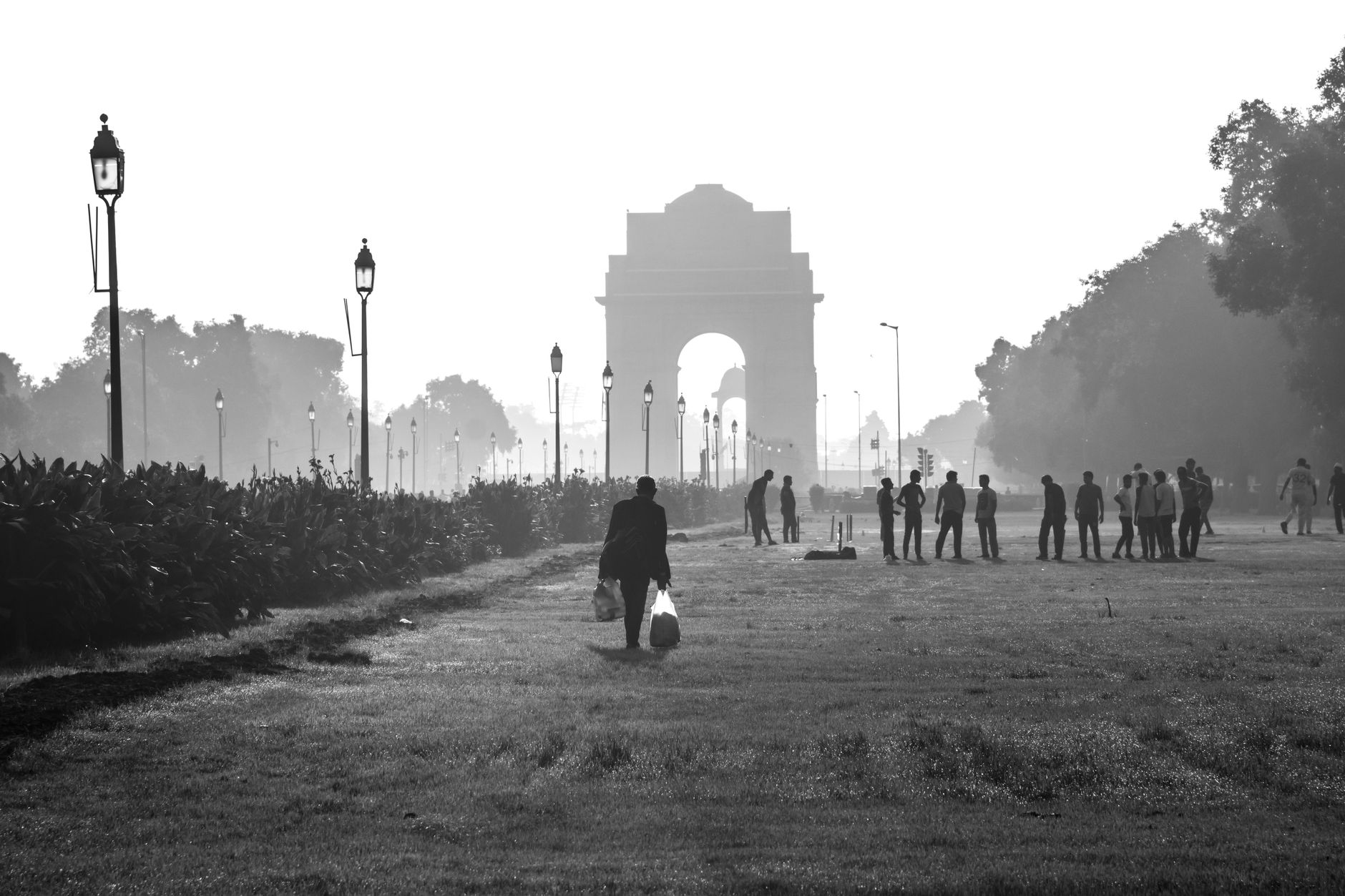
New Delhi is the imperial capital: Lutyens' bungalows, India Gate, Connaught Place, the government quarter, the museums, and by extension all of Old Delhi north of it — Chandni Chowk, the Red Fort, Jama Masjid, Nizamuddin. Gurugram is the private-sector city that grew up 30 km south-west in Haryana, on the Delhi-Jaipur highway, over the past 25 years. The two are welded into a single metropolis by traffic and by the yellow line of the Delhi Metro, but they feel like different countries.
The straight drive from Connaught Place to Cyber City is 45-70 minutes depending on the hour and 90+ minutes in evening rush. The Delhi Metro connects them in about 55 minutes end to end (Rajiv Chowk to Huda City Centre, then a Rapid Metro or auto for the last stretch), fare ₹57-₹76. Neither city is a day trip from the other in practice — pick a base and commute occasionally, don’t try to split nights.
What you’re actually here for
If your trip is monuments, museums, historic bazaars, food history, embassies, or anything associated with 'Delhi' the tourist destination, book New Delhi. The Red Fort, Humayun's Tomb, Qutub Minar, the National Museum, Lodhi Gardens, Chandni Chowk, Nizamuddin dargah and every classical Indian sight are on that side. Gurugram has almost no historic sights and does not pretend otherwise; the one it can claim, the Sheetla Mata Mandir, is a local pilgrimage site not a tourist one.
If your trip is business meetings in the tech corridor, a wedding in one of the DLF farmhouses, shopping at Cyber Hub or Ambience, a nightlife weekend at Sector 29, or a comfortable base with reliable modern infrastructure and international chain hotels, book Gurugram. The private-sector economy — offices, malls, restaurants, hospitals — is genuinely more advanced on this side, and the newer construction shows in the hotels.
What a night costs on each side
For a comparable three-star hotel, New Delhi and Gurugram are near identical: ₹4754-₹8558 in the mid-range, ₹10460-₹17116 for four-stars, ₹20919-₹38035 for five-stars. Where they diverge is at the extremes. Budget beds are cheaper in Delhi — you can find ₹1712-₹2377 rooms in Paharganj and the Karol Bagh backpacker strip that Gurugram simply does not offer, because Gurugram has no backpacker district. The cheapest genuine tourist beds in Gurugram sit around ₹2853.
At the top end, Gurugram's five-stars are newer and often larger for the price. The Delhi luxury hotels around Lodhi and Chanakyapuri hold their prices on heritage and location rather than facilities. Both cities push rates 20-40% higher for wedding season (October-February) and major event weeks. For airport hotels specifically, Aerocity in Delhi is the standard and Palam Vihar is the value alternative in Gurugram.
Getting around each city
New Delhi is walkable in patches — Connaught Place, Khan Market, Hauz Khas, Lodhi Colony, the Old Delhi bazaar streets — and the Delhi Metro is genuinely excellent, 12 lines and 250+ stations for ₹29-₹76 a ride. Autos and cabs are cheap. You can spend two weeks in Delhi without ever needing to hire a car. This is unusual for an Indian metro and it is the single biggest quality-of-life advantage over Gurugram.
Gurugram is a driving city. The Rapid Metro serves only Cyber City and Golf Course Road and does not connect to most hotels or attractions. Sidewalks are inconsistent even where they exist. Every trip is an Uber. Budget ₹285-₹571 per ride and 15-30 minutes of driving between any two useful points. This is fine if you plan for it but a shock if you arrived expecting to walk. It also means evening rush and Friday nights can cost you an hour of your day easily.
Eating on each side
Delhi wins on range and history. The old food streets — Paranthe Wali Gali, Karim's, Al Jawahar, Chandni Chowk chaats — are Delhi's, not Gurugram's. Khan Market and Hauz Khas cover the mid-range restaurant scene. The Nizamuddin and Jangpura pockets have some of the best small kitchens in the country. A serious eater in Delhi has three weeks of dinners lined up before they run out of ideas.
Gurugram wins on new-restaurant polish and on international cuisine. Cyber Hub and the DLF Cyber City food strip host every chef-driven modern Indian, Asian, and European concept the two cities can support. Sector 29 covers casual mid-range with bars attached. The Punjabi and Mughlai food is good but not distinctive; it is the same food, cooked better in the old Delhi originals. If your eating list is 'north Indian classics', go to Delhi. If it is 'sushi, ramen, small plates, cocktails', go to Gurugram.
Airport access and transit stays
Indira Gandhi International sits between the two cities, slightly closer to Gurugram on the map but slightly better connected to central Delhi via the Airport Express Metro (T3 to New Delhi station in 20 minutes, ₹171). From Gurugram, the airport is 25-45 minutes by cab depending on where you are staying; from central Delhi, 30-50 minutes. From Aerocity or Palam Vihar, 10-25 minutes. For a genuine transit-only stay of one night, both work — Aerocity is closest, Palam Vihar is cheapest.
For a two- to four-night stopover, pick based on what you want to see. Delhi is the tourist trip; Gurugram is the comfort stop. A five-night trip realistically splits 3-2 in favour of Delhi unless you have specific Gurugram business. Do not try to base in one and 'do' the other daily — the commute will erase two hours a day.
Straight answer
Book New Delhi if this is your first trip to India, if you want to see monuments and eat traditional food, if you want to walk and use a metro, or if you are on a real budget under ₹3804 a night. Delhi has more to see, more history, and better public transport. It is also louder, more polluted (November-January especially), and more overwhelming for a first-time visitor.
Book Gurugram if you have business meetings on this side, if you want modern hotels and a pool, if you are travelling with kids who need predictable amenities, if you are here for a wedding or event on the Gurugram side, or if you are trying to escape Delhi's winter smog for a slightly less bad version. Split the trip only if you have seven or more nights and can genuinely commit four to Delhi and three to Gurugram, in that order, not the other way round.
Good to know
Questions, answered
How do I get from Gurugram to central Delhi cheaply?
The Delhi Metro yellow line from Huda City Centre to Rajiv Chowk (Connaught Place) takes 50-60 minutes and costs ₹57-₹76. Get to Huda City Centre by auto (₹95-₹190) or Uber (₹285-₹380). This is far cheaper than a direct cab (₹951-₹1426) and often faster in evening traffic.
Which is safer for solo travellers, Delhi or Gurugram?
Both are broadly safe by day and both require normal city caution after dark. Gurugram's newer neighbourhoods (DLF, Golf Course Road, Cyber City) feel more like a modern business district and are quieter at night. Central Delhi is busier and more surveilled. Old Delhi and outlying sectors of both cities warrant more care after 10pm.
Can I do a day trip to Agra from either city?
Yes from both, more easily from Delhi. The Gatimaan Express from Hazrat Nizamuddin reaches Agra in 100 minutes, ₹761-₹1426 one way. From Gurugram, add 45-60 minutes to reach the Delhi station. Same-day return trips work but leave you 4-5 hours in Agra — enough for the Taj Mahal and Agra Fort, nothing more.
Doing good is the business: every booking through Stay Gurugram funds one verified tonne of carbon removal — same room, same price, no markup.
Start your search